
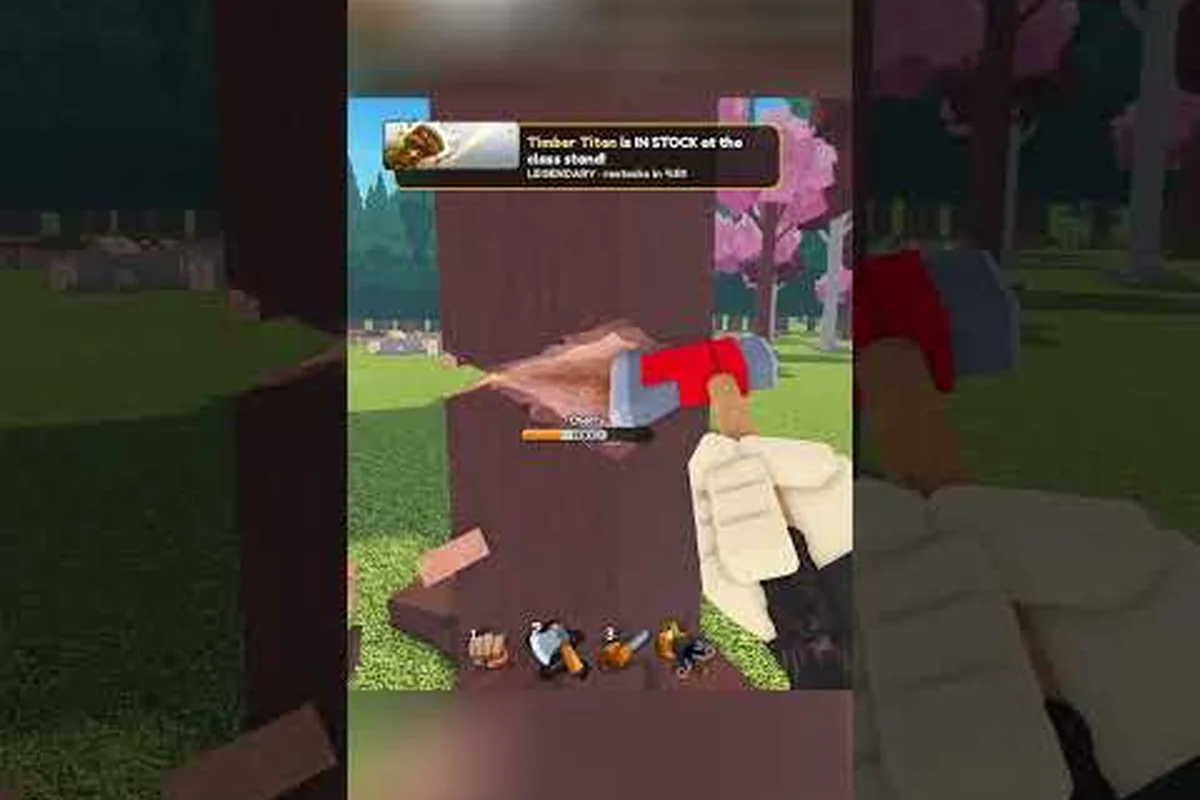
Mutated trees are the highest-paying targets in Chop A Forest, but the base spawn rate is intentionally low, so most players wander the early zones for hours before seeing one. This guide breaks down Chop A Forest how to get mutated trees by stacking the right perks, choosing the correct zones, and swinging at the right tempo, which together raise your odds without burning Gems on guesswork.
Understanding Mutated Trees in Chop A Forest
Mutated trees are rare variants of normal trees that glow with a different color tint and drop extra Gems when felled. According to community data referenced on the the listing on Roblox, they function as a hidden reward layer on top of the standard wood-and-gem economy, which means every regular chop is technically a lottery ticket for bonus currency. Most players who ignore them never realize the perk shop sells two items that directly increase their appearance and payout.
What Makes a Tree "Mutated"
A mutated tree looks like a normal tree of the same species, but with a glowing aura, a shifted color palette, and a slightly larger trunk radius. The game does not announce the mutation with a pop-up, so you have to watch the canopy line while you walk. The visual cue is reliable: community reports describe the aura as a steady pulse rather than a flashy burst, which keeps it readable in busy biomes where other lighting effects compete for attention.
How Mutations Differ from Regular Rare Trees
Chop A Forest has two parallel rarity layers: the regular rare tree drops (like Golden Logs) and the mutation system. They are independent, so a single tree can theoretically roll both, although community data treats that combination as extremely uncommon. Players who are focused on chop a forest mutated tree gems should treat mutations as the main payout and Golden Logs as a small side bonus, because the mutation bonus multiplies on top of any other drop.
Perks That Increase Mutation Chance and Payout
Two perks in the perk shop directly shape your mutation farming economy. Both cost Gems, which means you have to decide whether to buy them before or after your class, your axe upgrades, or your backpack expansion. The order matters more than most beginners realize because the perk bonuses compound across every chop, not just the lucky ones.
| Perk Name | Effect | Gem Cost | Best Buy Order |
|---|---|---|---|
| Gem Value | +20% Gems from trees | 50 Gems | Buy first if you chop casually |
| Mutation Luck | +15% mutation chance | 25 Gems | Buy second once Gem Value is unlocked |
| Sharpness | +10% chop speed | 75 Gems | Buy after both mutation perks |
| Backpack I | +25 wood carry cap | 30 Gems | Buy only if you over-cap often |
Gem Value Perk — The Payout Multiplier
The Gem Value perk boosts the number of Gems any tree drops, mutated or not, by 20%. For a casual player who chops a few hundred trees a day, this is the highest-leverage purchase in the shop, because it pays off on every swing. According to community data from the Chop A Forest Discord, players who buy Gem Value first report a noticeably smoother early-game economy even before they ever see a mutated tree, which is why the perk is recommended as the default first purchase.
Mutation Luck Perk — The Appearance Booster
The Mutation Luck perk increases the chance that any given tree you chop is a mutated variant, by 15% on top of the base rate. The base rate is low (community testing places it somewhere in the low single digits per 100 trees), so a 15% relative boost is a meaningful but not overwhelming change. Players who commit to serious mutation farming should buy Mutation Luck second, because stacking both perks produces a compounded effect: more mutated trees appear, and each mutated tree pays out 20% more Gems than the base gem drop would.
Zone Tier List for Mutation Farming
Not all biomes are equal when it comes to mutation density. According to community data, the higher-tier zones have a slightly elevated mutation rate per tree, although the absolute increase is small enough that perk stacking matters more than zone choice for most players. Still, a smart zone rotation reduces the time you spend walking between trees and keeps your chop cadence high.
| Zone | Tree Level Required | Mutation Density (Community Estimate) | Notes |
|---|---|---|---|
| Starter Glade | 1 | Lowest | Safe but low payoff |
| Birch Hollow | 5 | Low | Good for perk grinding |
| Pinewood Ridge | 10 | Medium | First zone where mutations feel routine |
| Crimson Thicket | 20 | Medium-High | Recommended main farming zone |
| Golden Grove | 35 | High | Endgame zone, requires strong axe |
| Shadow Canopy | 50 | High | Late-game, mutation-heavy |
Pinewood Ridge — The First Real Farming Zone
Pinewood Ridge unlocks at tree level 10 and is the first zone where mutation sightings become common enough to plan around. The trees are dense, the respawn timer is short, and the visual contrast between normal and mutated pines is sharp, which makes scanning the canopy easier. Beginners who have stacked both perks will start to see one mutated tree roughly every minute of focused chopping, which is the threshold at which mutation farming becomes a real income source rather than a side bonus.
Crimson Thicket and Golden Grove — Endgame Targets
Crimson Thicket and Golden Grove are the zones where mutation farming graduates from a side activity to a primary strategy. Both have higher tree density, faster respawns, and a community-reported slight increase in mutation rate per tree. Players who have invested in a strong axe and a large backpack should rotate between the two zones rather than camping one, because each biome tends to have a slight lull in respawns every 20 to 30 minutes, and switching zones smooths out the gap. A complete walkthrough of the zone unlock order is covered in the Chop A Forest full guide, which pairs well with this farming rotation.
Swing Pattern, Axe Choice, and Cadence Tips
The way you chop matters as much as where you chop, because mutation chance is rolled per tree felled, not per swing. A slow axe with a long chop animation does not give you better odds, it just gives you fewer rolls per minute. Players who want to maximize mutation farming output should focus on chop speed, swing consistency, and minimal downtime between fells, which together raise the number of mutation rolls they get per hour.
| Strategy | Effect on Mutation Rate | Difficulty to Implement |
|---|---|---|
| High chop speed axe | More rolls per minute | Easy, just buy upgrades |
| Continuous pathing | Less walking downtime | Medium, requires zone knowledge |
| Backpack upgrades | Fewer trips to sell | Easy, low Gems cost |
| Multi-tree clustering | Slightly faster clears | Hard, needs map memorization |
Chop Speed Beats Raw Damage
For mutation farming, a faster axe is strictly better than a harder-hitting slow axe, because the mutation roll happens when the tree falls, not when you deal a threshold of damage. The Sharpness perk (75 Gems, +10% chop speed) and any tier-3 or higher axe both meaningfully raise your rolls per minute. The Chop A Forest wood farming guide goes deeper into axe upgrade math if you want to optimize your gear before committing to a farming route.
Path Planning to Minimize Downtime
The fastest mutation farmers spend almost no time running between trees, because they plan a loop through the densest clusters in their target zone. Pinewood Ridge has several tight groves where you can fell four or five trees in a row without turning, which is the optimal pattern: chop, chop, chop, sell, repeat. Beginners tend to over-explore and under-chop, which lowers their rolls-per-minute even when their perks are perfectly stacked, so learning a two- or three-groove loop is the single biggest non-perk upgrade you can make.
Mutation Farming Session Plan
A focused 30-minute mutation farming session can produce a meaningful Gem boost if you stack perks, pick the right zone, and keep a tight swing cadence. The session plan below assumes you already own both Gem Value and Mutation Luck, are at least level 10 (to access Pinewood Ridge), and have at least a tier-2 axe equipped. Players who are below that threshold should still benefit, but the absolute numbers will be lower.
| Session Phase | Duration | Activity | Expected Outcome |
|---|---|---|---|
| Warmup | 0–5 min | Sell inventory, restock area | Clean backpack, full zone |
| Main grind | 5–25 min | Tight loop in target zone | Most mutations spawn here |
| Cool-down | 25–30 min | Slow chop, sell inventory | Catches late-spawning mutations |
Step 1 — Sell and Reset
Start every farming session by emptying your backpack at the sell stall, because overfilling triggers an automatic walk-back that breaks your swing cadence. A clean backpack lets you chop continuously for the full session, and the sell action itself triggers a brief server tick that can sometimes respawn nearby trees faster. The Chop A Forest gem farming guide has a full breakdown of when to sell versus when to keep chopping if you want to fine-tune this step.
Step 2 — Lock Into Your Loop
Pick a two- or three-groove loop in your target zone and commit to it for the full main grind phase. Switching zones mid-session resets your respawn timing and usually costs more time than it gains. Pinewood Ridge's central cluster is a popular first loop because the trees are tightly packed and the visual contrast makes mutated pines easy to spot, which lets you confirm your perks are working within the first 10 minutes of the session.
Step 3 — Cool Down and Bank
The last five minutes of the session should be a slower, more deliberate chop pattern, because the visual scan often picks up mutations you walked past during the high-tempo main grind. End by selling everything you have on you, bank the Gems, and re-evaluate your perk priorities for the next session. A consistent cool-down phase tends to surface one or two extra mutated trees per session that a pure speed run would have missed, which compounds across a week of daily farming.
Frequently Asked Questions
What is the fastest way to find mutated trees in Chop A Forest?
The fastest way is to stack the Mutation Luck and Gem Value perks, then run a tight loop in Pinewood Ridge or Crimson Thicket with a fast axe. The combination raises both the spawn rate and the per-mutation payout, which together produce visible results within 10 to 15 minutes of focused chopping.
Do mutated trees drop more Gems than regular trees?
Yes. According to community data, a mutated tree drops meaningfully more Gems than a normal tree of the same tier, and that bonus is multiplied further if you own the Gem Value perk (+20% to all gem drops from trees). The exact numbers vary by tree tier and zone, but the mutation payout is consistently several times the base gem drop.
Should I buy Mutation Luck or Gem Value first?
If you only chop casually, buy Gem Value first because it pays off on every swing and gives an immediate economy boost. If you are actively focused on Chop A Forest mutation farming, buy Mutation Luck first and Gem Value second, because the appearance rate is the limiting factor and payout only matters once you are actually finding mutations.
Can mutations appear in the Starter Glade?
Community reports place mutation spawns at every zone tier, including the Starter Glade, but the rate is so low that most beginners will not see one before outleveling the zone. The mutation density scales up in Pinewood Ridge and beyond, so it is more efficient to wait until you unlock tier-2 biomes before committing to serious farming.
How do mutated trees differ from Golden Logs?
Mutated trees and Golden Logs are independent rarity layers. A mutation is a visual variant of a normal tree that drops extra Gems, while a Golden Log is a special drop from a regular tree, and the two can theoretically appear together. Players who want to maximize both should treat the mutation system as the main payout and Golden Logs as a small side bonus that occasionally appears during a regular chop session.